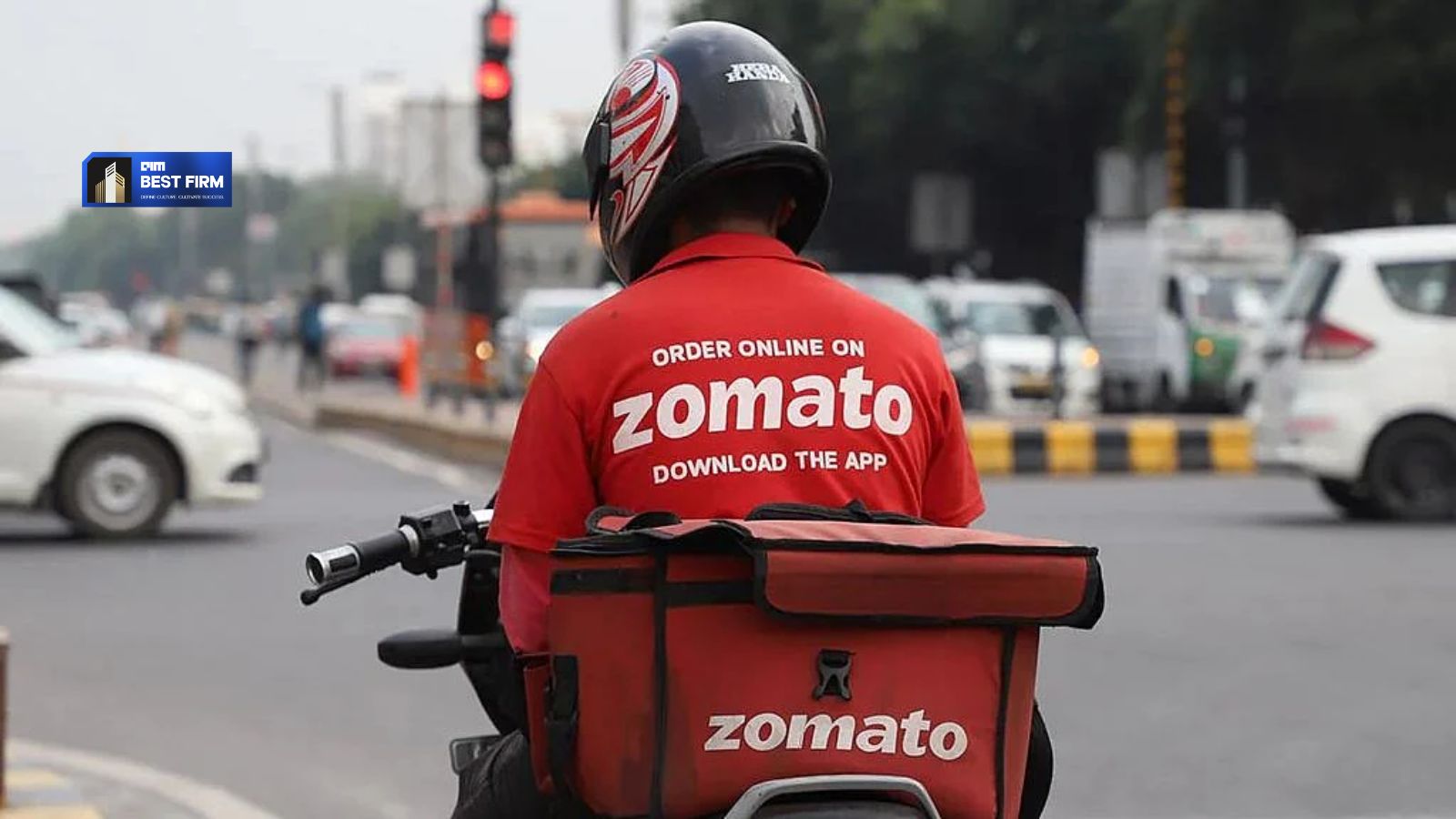
Zomato Says It Removes 5,000 Delivery Partners Monthly
Zomato terminates around 5,000 delivery partners every month, founder and chief executive Deepinder Goyal said in a recent public discussion, offering a detailed disclosure on workforce churn at one of India’s largest food delivery platforms.
The statement was made during a podcast interview with YouTuber Raj Shamani, where Goyal spoke about hiring, exits, and operational controls within Zomato’s delivery business, which operates under parent company Eternal.
Goyal clarified that the figure applies only to delivery partners engaged through Zomato’s platform and does not include salaried corporate employees. These workers operate under a gig-based arrangement, where continued access to the app depends on compliance with service standards, conduct guidelines, and performance benchmarks set by the platform.
Alongside company-led terminations, Zomato sees significantly higher levels of voluntary exits. Goyal said between 1.5 lakh and 2 lakh delivery partners leave the platform on their own each month, even as a similar number are onboarded during the same period. Many delivery partners, he said, take up the role temporarily to meet immediate financial needs and exit once those needs are met.
As a result, the delivery workforce remains in constant movement. Goyal said Zomato can predict onboarding requirements only to a limited extent, as individual decisions to join or leave are shaped by factors outside the company’s control. He described this churn as inherent to gig work rather than a result of job cuts in the conventional sense.
On the specific reasons for termination, Goyal said a significant proportion relates to repeated or serious instances of fraud. Examples included orders being marked as delivered without reaching customers and disputes involving cash-on-delivery payments where the correct change was not returned.
What the Monthly Termination Figures Mean
In a gig-platform setting, termination typically refers to the deactivation of a worker’s access to the app rather than dismissal from formal employment. Delivery partners are not on payroll and do not have employment contracts in the conventional sense. Their engagement continues only as long as platform-defined standards are met.
Food delivery platforms use app-based systems to track delivery times, order completion rates, cancellations, customer complaints, and reported misconduct. Accounts may be suspended or permanently deactivated if violations recur or if trust thresholds are breached. Termination in this context means removal from the active delivery network.
This is distinct from voluntary disengagement, where delivery partners stop logging in or choose to leave without enforcement action. Zomato’s disclosures separate these two categories, noting that voluntary exits account for the majority of workforce movement on the platform.
To manage disputes, Zomato uses an internal “karma score” system that evaluates the past behaviour of both delivery partners and customers. The system informs decisions on accountability when complaints arise.
“This is where the customer karma score and rider karma score kind of blend in, and we can never be fully right,” Goyal said. “If a customer’s karma score is good, they are more likely to be right, but no one can truly know what happened.”
Goyal said determining fault is often imperfect, and in around 50% to 70% of disputed cases, the company absorbs the cost instead of penalising either party.
He also pointed to increasingly sophisticated customer fraud, including false refund claims supported by manipulated or AI-generated images. These patterns have required tighter controls and monitoring across the platform.
While Zomato has not disclosed its current active delivery partner count, public filings and industry reporting indicate a workforce running into several lakhs nationwide. According to Mint, Zomato had an average of over 4.7 lakh active delivery partners during FY25. Against that scale, the monthly termination figure represents a relatively small share of total participants.
Gig Workforces and Platform Practices in India
Zomato’s disclosure comes amid greater scrutiny of gig work practices across India’s platform economy. Food delivery and ride-hailing companies account for a significant share of the country’s gig workforce, alongside e-commerce logistics and on-demand services.
Government-backed studies and independent research have consistently documented high turnover among gig workers. Short average tenures, intermittent participation, income variability, and ease of entry and exit are common features across platforms. Many workers combine delivery work with other jobs or treat it as a temporary income source.
Platform companies have maintained that flexibility and choice are central to the gig model, while labour groups and worker collectives have raised concerns around rating systems, account deactivations, and grievance mechanisms. These issues have drawn increasing regulatory attention as the sector has expanded.
India has formally recognised gig and platform workers as a distinct category and announced plans to extend social security benefits through registration-based frameworks. However, the contractor-based engagement model used by platforms remains unchanged.
Within this environment, Zomato’s disclosure provides a clearer view of how large platforms manage churn, enforcement, and risk at scale. The company’s approach to fraud control, dispute resolution, and continuous onboarding aligns with broader industry practices.
The statement also comes as Zomato’s business mix evolves. Its quick commerce arm Blinkit recently overtook food delivery in scale, while food delivery remains Eternal’s largest profit-generating business. Alongside these, the group operates the District dining and going-out business and Hyperpure, its business-to-business grocery supply arm.
As India’s gig economy expands, such disclosures offer insight into the operational realities behind platform growth, highlighting a workforce model defined by constant movement rather than long-term employment.

About Mansi Mistri
Mansi is a writer who enjoys breaking down complex topics into simple, readable stories. She is curious about how ideas move through people, platforms, and everyday conversations. You can reach out to her at [email protected].