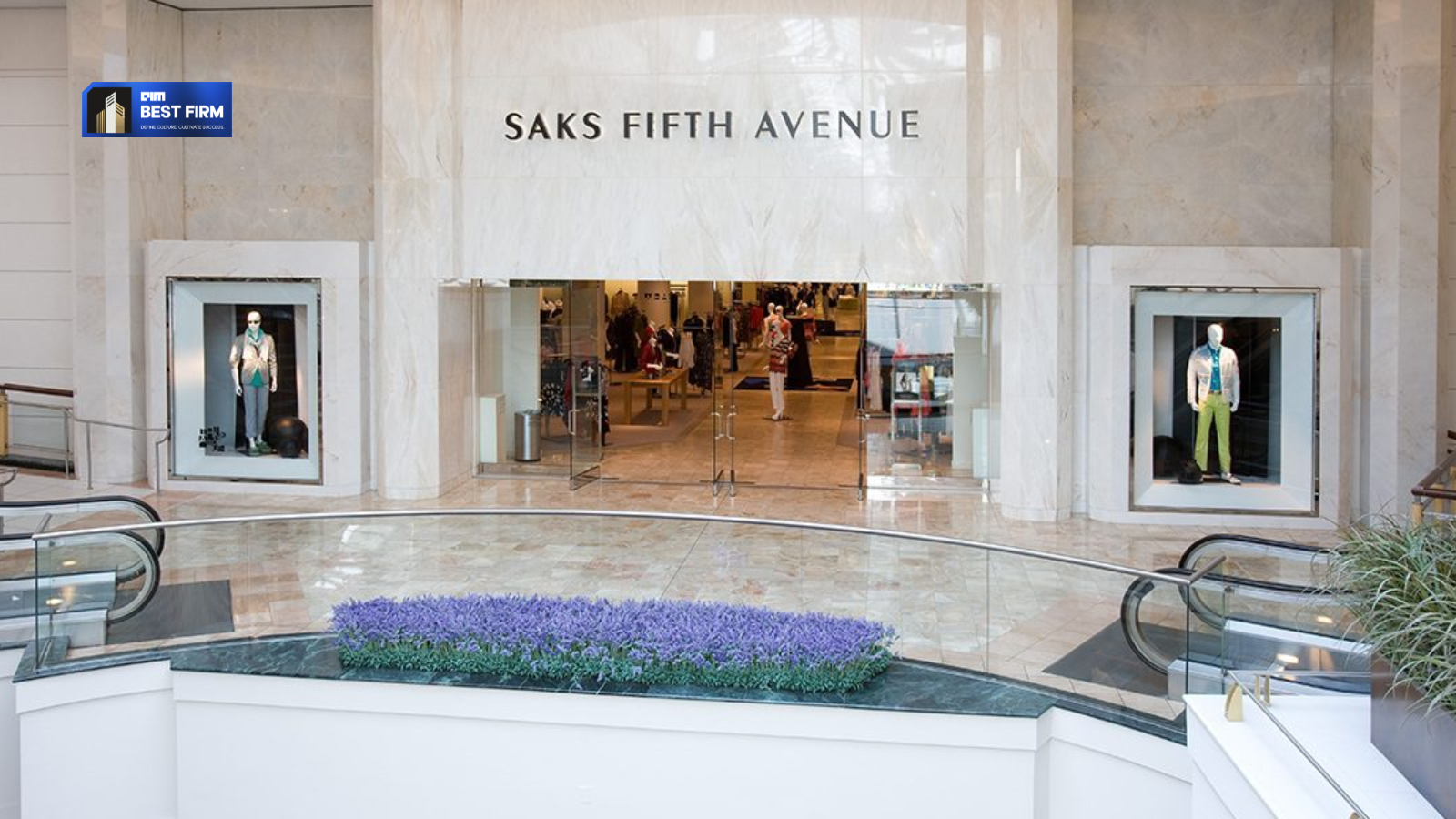
Saks to Eliminate Over 1,200 Jobs as Store Closures Follow Bankruptcy Filing
Saks Global will eliminate more than 1,200 jobs as part of a restructuring programme initiated after its Chapter 11 bankruptcy filing in January 2026. The workforce reduction is tied directly to store closures and the scaling down of operations across its retail network.
The company entered bankruptcy with approximately $3.4 billion in debt, following its acquisition of Neiman Marcus and ongoing operational challenges, including vendor payment delays and inventory disruptions.
The layoffs affect employees across store operations, corporate functions, and supply chain roles. Job losses are concentrated in locations identified for closure, with exit timelines aligned to store shutdown schedules between early May and the end of May 2026.
This reduction represents a significant portion of the company’s workforce, which stood at around 17,000 employees prior to bankruptcy. The cuts are intended to bring operating costs in line with a smaller store network and reduced inventory scale.
The company has positioned the layoffs as a necessary step to maintain operations during bankruptcy proceedings and to create a cost structure that supports its revised business model.
Store Closures and Restructuring Strategy
Saks Global is closing at least 15 department stores, including 12 locations under Saks Fifth Avenue and three under Neiman Marcus. These closures are part of a wider plan that will see a total of about 24 department stores shut by spring 2026.
The store closures are scheduled in phases, with some locations ceasing operations by the end of April and others by the end of May. The company is exiting markets where store performance has declined or where long-term profitability remains uncertain.
Following the restructuring, Saks Global expects to operate around 13 Saks Fifth Avenue stores and approximately 32 Neiman Marcus locations, alongside its Bergdorf Goodman flagship stores in New York.
The restructuring plan extends beyond department stores. The company is shutting down a large portion of its off-price business, including around 57 Saks Off 5th stores and all Neiman Marcus Last Call outlets, leaving only a limited number of locations to manage excess inventory.
Additional operational changes include the closure of standalone personal styling studios and the integration of certain digital platforms into core brand websites. These measures are aimed at simplifying operations and reducing overheads.
To support these actions, Saks Global has secured significant financing during the bankruptcy process, including access to a $1.75 billion debtor-in-possession funding package, with at least $300 million already drawn to maintain operations. A separate $1 billion loan has also been approved to address vendor concerns and ensure continuity in inventory supply.
The company reported that more than 500 brands have resumed shipments, helping restore inventory levels and generate over $1.3 billion in retail receipts during the restructuring period.
Financial Pressure and Shifting Luxury Retail Dynamics
Saks Global’s financial strain stems largely from its $2.7 billion acquisition of Neiman Marcus in 2024, which added substantial debt to its balance sheet. The company also missed key interest payments prior to filing for bankruptcy, further tightening liquidity.
Operational challenges compounded these issues. Vendor payment delays led several luxury brands to halt shipments, which reduced product availability in stores and affected sales performance.
The restructuring takes place as consumer purchasing patterns in the luxury segment continue to change. Online channels now account for a growing share of luxury sales, reducing reliance on large physical store networks. Lower in-store traffic has affected productivity across department store formats.
Retailers are responding by concentrating on fewer, high-performing locations. Saks Global’s post-restructuring network reflects this approach, with investment directed toward flagship stores and markets with stronger demand.
The company’s data shows that a small segment of high-value customers drives a large share of sales, with roughly 2% of customers contributing about 40% of gross merchandise value. This concentration is influencing decisions on store locations and inventory allocation.
Industry-wide adjustments are also underway. More than 1,300 store closures are expected across the United States in 2026 as retailers reduce physical footprints and focus on profitability. Companies across segments are reassessing store networks, workforce size, and cost structures in response to shifting demand patterns.
Saks Global’s restructuring combines workforce reduction, store closures, and operational consolidation as it works through bankruptcy proceedings. The company is moving toward a model centred on fewer stores, tighter inventory control, and continued investment in digital channels, intending to stabilize operations and improve financial performance.

About Mansi Mistri
Mansi is a writer who enjoys breaking down complex topics into simple, readable stories. She is curious about how ideas move through people, platforms, and everyday conversations. You can reach out to her at [email protected].