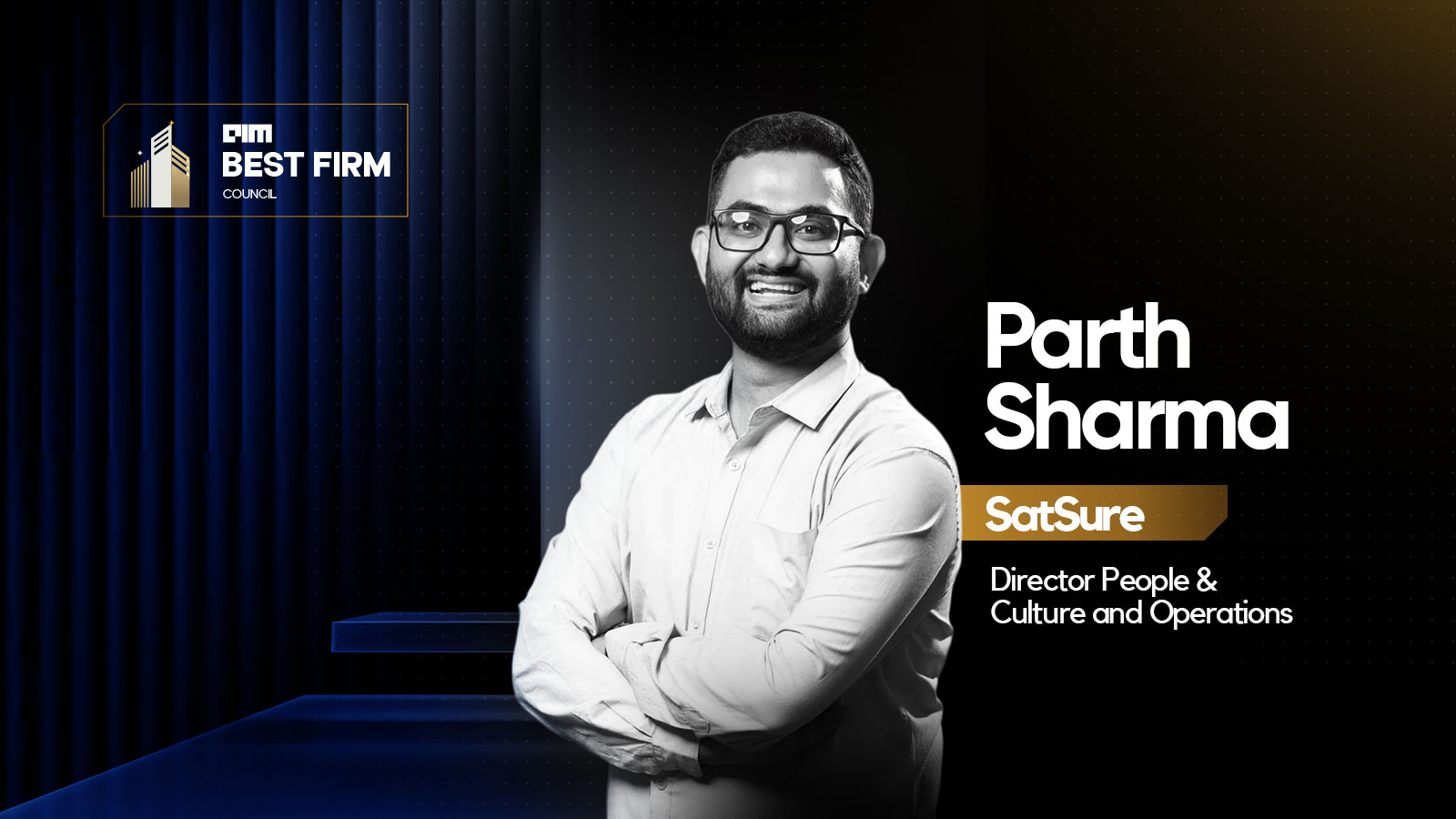
HR Vision Talk: SatSure’s Parth Sharma on People, Culture, and AI
Artificial intelligence is transforming how organisations function and how decisions take shape. Parth Sharma, Director of People, Culture and Operations at SatSure, approaches this shift from a systems mindset rooted in engineering, startup operations, and reflective practice. His thinking comes from building satellites at ISRO, navigating the uncertainty of a growing startup, and using meditation to stay grounded.
“AI should help people spend more time thinking, not typing,” Sharma says. It sums up his view of technology as something that should expand space for judgment, not compress it.
From Aerospace to People and Culture
Before SatSure, Sharma worked at the Indian Space Research Organisation. His early years involved satellite engineering, where precision, patience, and process discipline shaped outcomes. “Satellite building takes time. You have to be very precise and accurate,” he says. Work progressed through systems and coordination, with every step tested and reviewed.
SatSure offered a different environment. The pace was faster, information arrived in fragments, and decisions needed speed. “It felt like driving a car while building it,” Sharma says. As Chief of Staff, he worked across functions including product, strategy, operations, and people. This exposure led him to see culture as an operational system, not as an HR activity.
Meditation through Heartfulness helped him create internal stability. He describes it as a way to pause, listen better, and make decisions without urgency shaping the outcome. His engineering background stayed relevant. Break a complex problem into parts, test assumptions, and learn from feedback.
AI as a Practice Inside Work
Sharma views AI as a working method inside SatSure. “AI is a mindset, a way of working,” he says. Instead of a dedicated AI division, teams adopt tools through practical use cases.
One team built a knowledge GPT system that stores and retrieves documents, proposals and internal processes. It gives employees rapid access to information and reduces repeated questions across teams. Another internal space, Geek Speak, allows engineers and analysts to demonstrate how they automate document writing, data preparation or customer communication through AI tools. These sessions are informal and designed for practical learning.
“AI should make work more meaningful, mechanical effort less,” Sharma says. He believes AI performs consistently with structured tasks. Judgment remains with people. “AI can replace tasks, judgment stays human.”
Culture develops through repetition rather than instruction. Weekly syncs involve working conversations instead of status reports. Open product demos allow employees from any function to attend and question. Redlining sessions every quarter bring business, technology, and delivery teams together to discuss capacity, timelines, and priorities. Over time, these sessions have created a culture of shared accountability.
Sharma uses a simple analogy. Culture behaves like soil. When the environment carries clarity, trust, and ownership, teams take responsibility and ideas grow.
Leadership and What Comes Next
Sharma sees leadership in an AI era as the ability to enable learning, experimentation, and sound judgment. He points to three skills that matter most in this environment: learning agility, pattern recognition, and judgment. Teams that can learn quickly, connect signals across domains, and decide when to trust data or intuition will adapt better to constant change.
Flexible work models are already part of SatSure. The company engages both full-time and contract professionals and keeps expectations equal. Everyone joins the same review sessions, discussions, and cultural spaces. “Culture comes from behaviour, not employment type,” he says.
Sharma believes the future will be shaped by three forces working together: technology for speed, data for clarity, and culture for continuity. AI will take over tasks and structure information, but judgment, timing, and meaning will remain with people. “It is not about humans versus machines. It is about how they can complement each other,” he says.
For Sharma, the aim is steady. Build an organisation where tools clear friction, information improves decisions, and culture keeps teams aligned through growth and pressure. Progress arrives through continuous adjustments rather than dramatic shifts.

About Mansi Mistri
Mansi is a writer who enjoys breaking down complex topics into simple, readable stories. She is curious about how ideas move through people, platforms, and everyday conversations. You can reach out to her at [email protected].