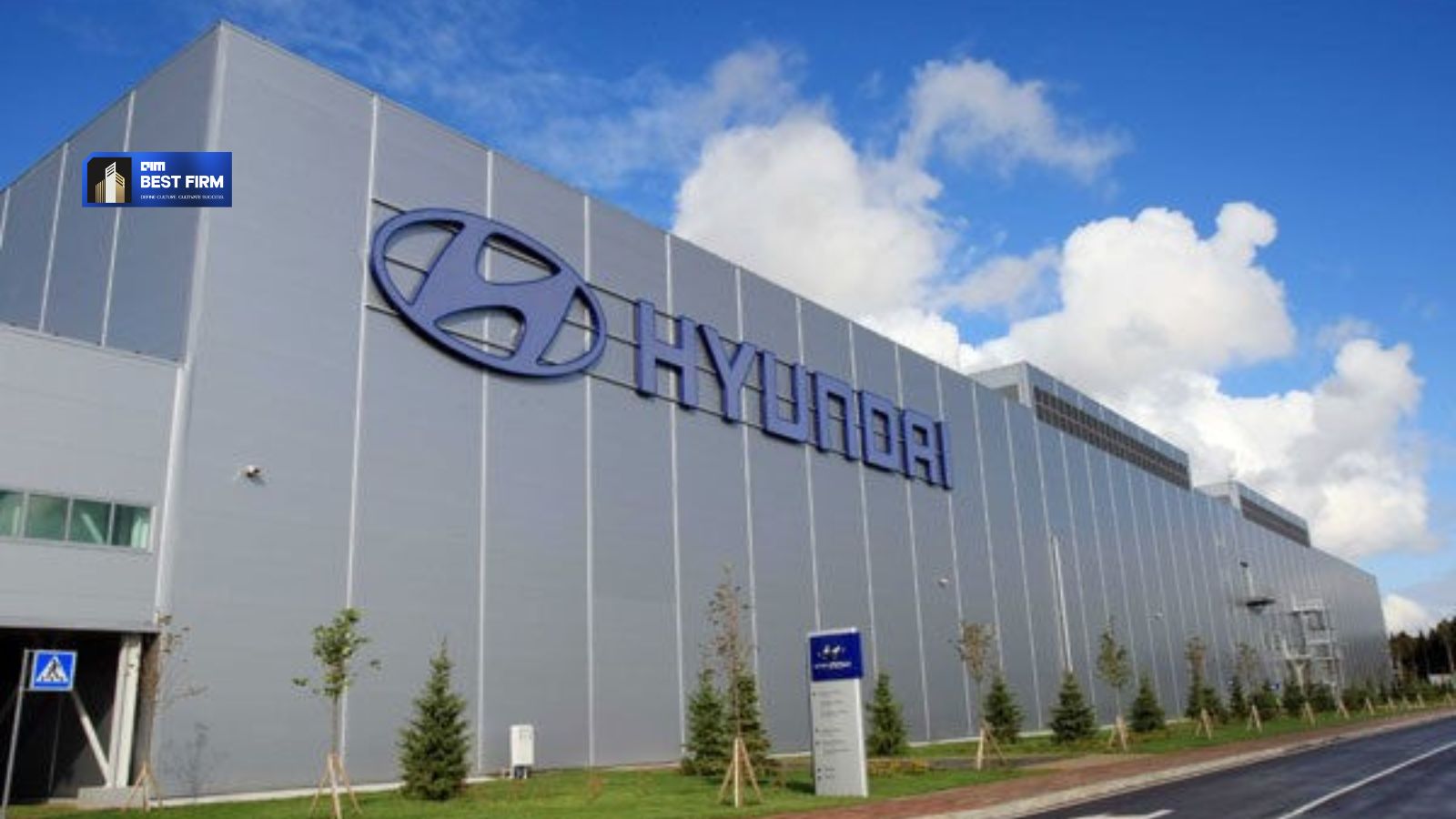
Hyundai to Deploy Humanoid Robots in Manufacturing Operations From 2028
Hyundai Motor Group has confirmed plans to deploy humanoid robots across its global manufacturing operations beginning in 2028, starting with its upcoming manufacturing facility in Georgia, United States. The initiative is aimed at supporting industrial operations involving higher-risk, physically demanding, and repetitive tasks, according to the company.
The announcement follows Hyundai’s introduction of the production-ready version of its Atlas humanoid robot at the Consumer Electronics Show (CES) in Las Vegas. Atlas has been developed by Boston Dynamics, the U.S.-based robotics company acquired by Hyundai Motor Group in 2021. Hyundai has said that the rollout is part of its longer-term manufacturing and robotics roadmap, with defined timelines, deployment phases, and continued involvement of human workers.
Hyundai’s Deployment Plan
Hyundai Motor Group plans to begin deploying Atlas humanoid robots in manufacturing operations from 2028. The first deployment is scheduled at the Hyundai Motor Group Metaplant America (HMGMA) in Georgia, which is currently under development and forms a key part of the company’s U.S. manufacturing expansion.
Atlas is a humanoid robot built for general industrial use. According to Hyundai and Boston Dynamics, the robot features human-scale hands, tactile sensing capabilities, and the ability to lift loads of up to 50 kilograms. It is designed to operate autonomously in industrial environments with temperatures ranging from –20°C to 40°C.
Hyundai has stated that the robots will be used to support manufacturing operations by taking on tasks involving physical risk and sustained manual effort. The company has linked the deployment to its broader AI robotics strategy, which includes closer integration between robotics, manufacturing data, and factory operations.
The group has also announced plans to establish a Robot Metaplant Application Center (RMAC) in the United States. The facility is scheduled to open in 2026 and will serve as a training and application hub where robots are trained to work alongside humans by learning movements such as lifting, turning, and recovery.
How the Robots Will Be Used
From 2028, Atlas robots will initially be assigned to parts sequencing and logistics-related tasks within Hyundai’s manufacturing facilities. These tasks form part of the early deployment phase and will be expanded gradually after safety, quality, and operational performance are validated.
Hyundai has stated that Atlas will later move into more complex manufacturing activities, including component assembly. By 2030, the company plans for the robots to handle heavy-load, repetitive, and precision-based operations across production lines.
The development and deployment of Atlas are being led by Boston Dynamics, working in coordination with Hyundai’s manufacturing teams. Hyundai has also confirmed collaborations with Nvidia and Google to support robotics development, autonomous decision-making systems, and industrial safety applications.
As part of its scaling plans, Hyundai has stated that by 2028, it aims to establish a production system capable of manufacturing up to 30,000 robot units annually. A new robotics manufacturing facility is planned in the United States to support this target.
Workforce Impact and Human Roles
Hyundai has stated that humanoid robots are intended to support human workers rather than replace them. According to the company, robots will be deployed to reduce physical strain and exposure to risk, while human employees continue to perform roles involving supervision, quality control, training, programming, and operational management.
The company has said that human oversight will remain central to robot operations. Workers will be responsible for monitoring robot performance, managing workflows, and ensuring production standards are maintained. Hyundai has also indicated that new roles will emerge around robot training and system management.
Hyundai Motor Group Executive Chair Jaehoon Chang has acknowledged workforce concerns linked to automation and stated that the company is focused on establishing collaborative working environments between humans and robots within manufacturing settings.
Labour groups have begun responding to these developments. Kia Corp’s labour union has called for frameworks to address future labour rights challenges as AI-driven automation expands across manufacturing operations.

About Mansi Mistri
Mansi is a writer who enjoys breaking down complex topics into simple, readable stories. She is curious about how ideas move through people, platforms, and everyday conversations. You can reach out to her at [email protected].