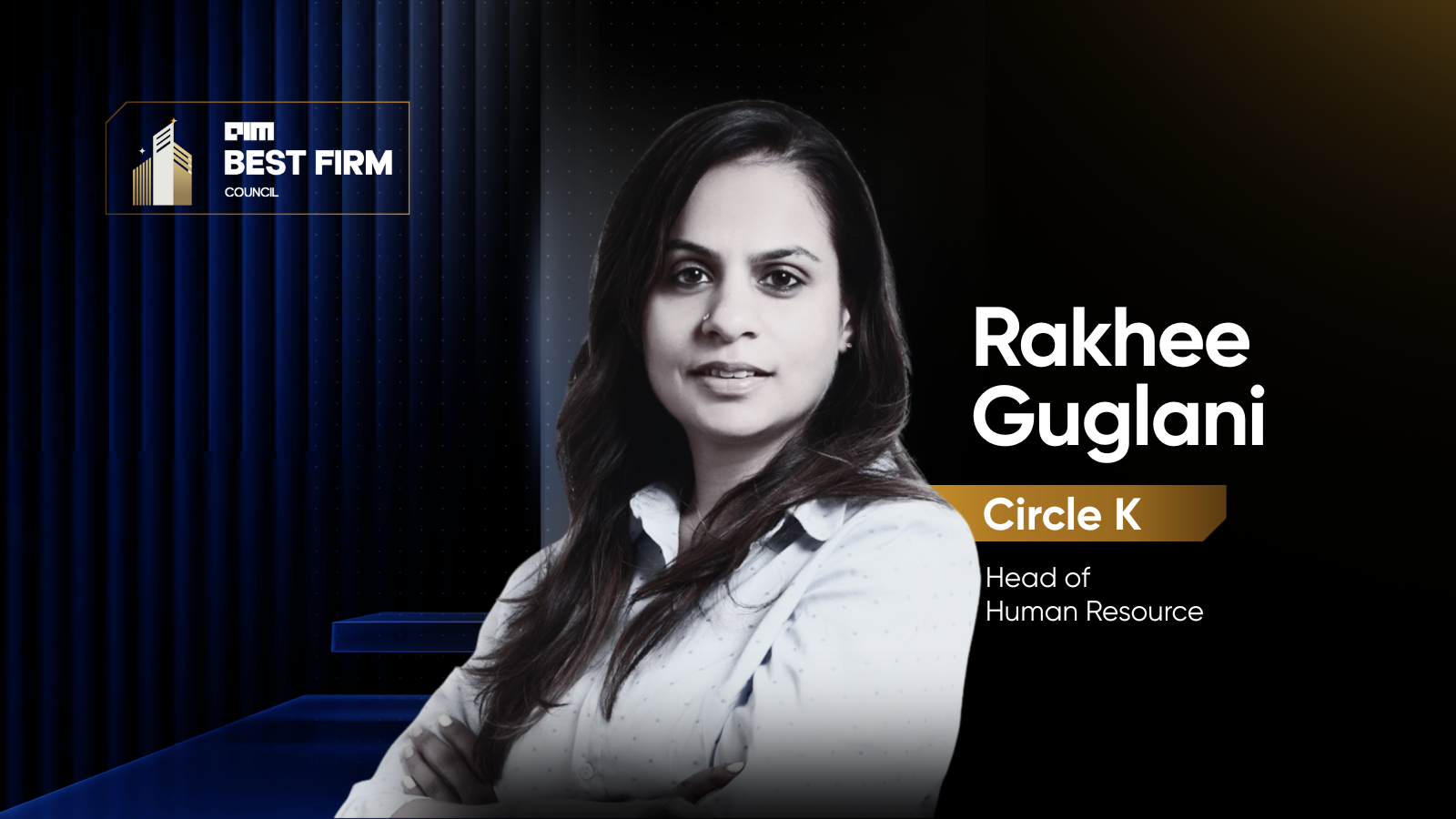
HR Vision Talk: Rakhee Guglani on Building Trust and Agility in Human Resources
"Empathy isn’t a soft skill; it’s the infrastructure holding us up when everything else is shifting,” Rakhee Guglani says.
As the Head of Human Resources at Circle K India, Rakhee brings over two decades of experience in managing complex and fast-evolving organizational settings. Her leadership philosophy is grounded in practicality, empathy, and clarity ,bridging strategic goals with the lived experiences of employees.
Rakhee’s role involves translating broad corporate objectives into clear, actionable priorities that are understandable to teams. Leadership means more than directing; it consists of helping employees understand how their work fits into the bigger picture and providing opportunities for them to grow on their own terms. Trust and honest communication form the foundation of this work.
Rakhee’s experience working across diverse sectors and cultures has brought her to appreciate the delicate balance needed between technology, culture, and people. Technology and tools matter, but they cannot replace human connection, empathy, and cultural alignment.
Adapting to a Generational Workforce
The modern workforce spans multiple generations, each bringing different expectations and working styles. Central to Rakhee's perspective is the impact of Generation Z, a cohort reshaping how businesses think about talent. Gen Z does not conform to traditional career models; instead, they seek fast-tracked learning and continuous development aligned with their personal aspirations.
This generational shift challenges HR leaders to innovate and move beyond rigid career pathways, embracing ecosystems that promote lifelong learning and adaptability. Rakhee explains, “Our task is to create environments where employees feel equipped to grow skills continuously and navigate constant change.”
Within this landscape, emerging leaders play the most important role. They translate leadership intent into day-to-day decisions. They influence how employees feel about their work far more than any policy or vision statement.
Recognizing this, Circle K invests deeply in developing emerging leaders not as task owners, but as culture carriers, mentors, and decision-makers. Their development goes beyond technical competence to include accountability, critical thinking, stakeholder partnership, and mature decision-making.
She also acknowledges the evolving needs around work flexibility. Whether it’s hybrid models or industry-specific adjustments, she believes flexibility should serve both performance and well-being, not become a blanket rule. “Agility is not about convenience,” she notes. “It’s about doing what enables people to deliver their best.”
Balancing Data with Human Judgment and Prioritizing Fairness
Data driven HR is essential, Rakhee cautions against treating numbers as the only truth. While numbers reveal patterns but cannot capture emotions, trust, or culture on its own. She uses data as a foundation but complements it with surveys, listening forums, informal conversations, and cultural insights that offer real context.
“Data without cultural interpretation can mislead us,” she explains. A metric might show attrition, but only conversations but only conversations reveal why.
Circle K’s hiring and promotions reflects this balance as well. Meritocracy, fairness, and bias-free decisions are non-negotiable for Rakhee. Transparent processes and equitable opportunities are not just ethical, they drive engagement, collaboration, and long-term performance.
Technology plays a strong supporting role. Rakhee supports continuous improvement and optimization to make processes faster and more accurate, but with ethical boundaries. She believes AI should assist decisions, not replace human judgment, especially when decisions touch personal data, trust and performance.
“Technology should help us, not replace the human values that hold an organization together,” she says.
Culture as a Daily Leadership Commitment
For Rakhee, organizational culture is not a slogan or periodic initiative but but as the accumulation of everyday choices leaders make.
Culture is built through transparency, integrity, and empathy in daily interactions. Recognizing employee contributions, setting clear expectations, and genuinely listening create environments where employees feel valued and motivated.
Teams thrive when they feel valued, heard, and connected to leadership values. This alignment strengthens retention, fuels performance, and builds adaptability- qualities essential for navigating change.
“Trust can’t be earned through one-time statements,” she says. “It must be lived consistently.”
Expanding Leadership Impact and Embracing Future Challenges
Rakhee believes the evolving role of HR requires embracing both strategic foresight and empathy-driven leadership. She sees leadership development as a continuous journey, especially for emerging leaders poised to become future organizational anchors.
“Investing in these emerging leaders promotes resilience and agility, crucial for navigating tomorrow’s challenges,” she notes.
She champions peer-to-peer learning, giving employees ownership of their development and enabling continuous growth. This aligns especially well with younger generations who value autonomy, purpose, and learning-rich environments.
Balancing human judgment with technological advancements remains a core theme in Rakhee’s philosophy. While data and digital transformation streamline many HR processes, she argues that conscious ethical oversight is essential to safeguard employee trust and privacy. HR must remain vigilant that technology serves to enhance, not replace, human connection.
Rakhee’s vision for HR blends adaptability, inclusiveness, inclusiveness, responsible use of technology, and heartfelt leadership. She believes sustainable success comes from leaders who live their values daily and from employees who trust that the organization will honor its commitments.
As she says, “Sustainable success depends on how well leaders live their values every day and how deeply employees trust their organization to uphold them.”

About Mansi Mistri
Mansi is a writer who enjoys breaking down complex topics into simple, readable stories. She is curious about how ideas move through people, platforms, and everyday conversations. You can reach out to her at [email protected].