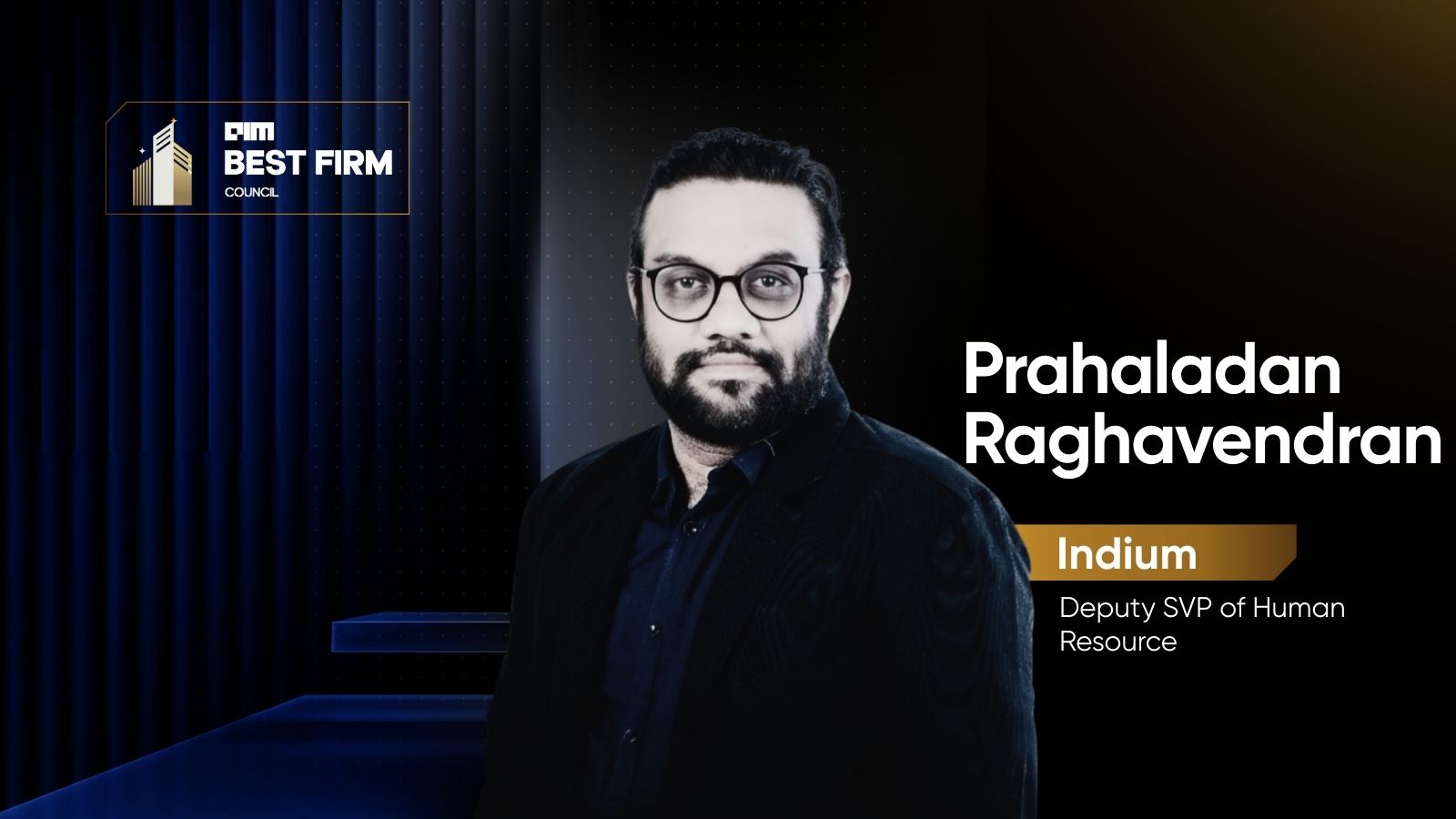
HR Vision Talk: Prahaladan Raghavendran on Context, Judgment, and Execution in HR Leadership
People systems often grow alongside organisations, yet understanding does not always keep pace. Roles expand, teams become specialised, and leadership layers deepen, while expectations around performance, growth, and accountability continue to move quickly. In this environment, HR decisions travel across distance and interpretation before they reach employees. The quality of that journey shapes how people experience leadership.
Prahaladan Raghavendran has spent nearly eighteen years working within this reality. His career across IT services, consulting, global delivery environments, and engineering-led organisations has placed him in contexts where people practices carried strong intent and equally strong pressure. Over time, he observed that the effectiveness of HR depended less on frameworks and more on whether decisions continued to make sense once they reached managers and teams.
Now serving as Deputy SVP of Human Resource at Indium, Prahaladan operates at a point where growth remains deliberate, and expectations around delivery remain high. His leadership attention stays fixed on a central concern.
Whether people's decisions continue to carry meaning as organisations evolve. “HR works when people can connect the decision to the business,” he said. “That connection decides credibility.”
Context as the Basis for People's Decisions
Prahaladan’s view of HR leadership begins with proximity to the business. Early in his career, he worked in environments where leaders invested time in explaining expectations and trade-offs. Employees understood how their work linked to outcomes and how people's decisions supported delivery. Performance discussions, career movement, and accountability shared a common language.
As responsibilities expanded across larger organisations, a different pattern emerged. Standardised people practices aimed to bring order across units, while business realities varied sharply. Teams operated under different delivery cycles, client pressures, and skill requirements, yet people systems often stayed uniform.
“Every business runs with its own rhythm,” he said. “People's practices need to respect that rhythm.”
This gap surfaced through everyday conversations. Managers struggled to apply frameworks that felt distant from how their teams worked. Employees followed processes while searching for relevance. HR spent increasing time explaining intent rather than advancing outcomes.
These experiences shaped Prahaladan’s belief that clarity comes from reasoning rather than replication. A shared employee life cycle still matters, yet interpretation needs to align with how work happens. Consistency, in his view, comes from explaining decisions clearly rather than enforcing identical application.
In his current role, this philosophy guides how people's decisions are shaped across practices. Data engineering teams, quality engineering groups, and platform-focused units experience work differently. Talent expectations, learning pace, and performance conversations account for those differences. HR decisions are framed using business language so managers carry them forward with confidence.
“People accept decisions when they see the logic behind them,” he said. “Understanding builds trust.”
Change That Builds on Identity and Experience
Several formative lessons in Prahaladan’s career came from working in environments shaped by strong cultural identities. In a global engineering organisation influenced by European and Japanese leadership philosophies, people's decisions carried cultural meaning. Career progression followed mastery. Recognition aligned with long-term contribution. Employees valued outcomes tied to collective effort.
Introducing people practices drawn from service-driven environments required sensitivity. Systems that overlooked existing identity created distance. Prahaladan observed that change gained acceptance when it was built on what people already understood about their organisation.
“People come with a sense of who they are,” he said. “Change works when that sense stays intact.”
This insight shapes his approach to change management. Change carries emotional and operational weight. Large shifts demand attention and belief. Leadership judgment determines when evolution supports progress and when continuity serves the organisation better.
In his current context, this has meant beginning with careful observation. Practices that supported delivery and collaboration received support. Areas that needed improvement received focused attention. The emphasis stayed on steady execution rather than sweeping redesign.
Much of this work eventually rests with managers, because they are the ones who turn intent into daily experience for teams. Managers translate intent into experience. Their ability to explain decisions shapes how change reaches teams. Prahaladan invests time in helping leaders understand both the decision and the reasoning behind it.
“When leaders explain the why clearly, people adapt faster,” he said.
This approach treats change as an ongoing leadership responsibility rather than a one-time exercise.
Technology as Support and Judgment as Daily Practice
Prahaladan speaks about technology with practical confidence. Digital tools and AI-enabled platforms have expanded HR’s ability to access information, identify patterns, and move faster across recruitment, workforce planning, and employee insights. Market data has become easier to access. Early indicators surface sooner in decision cycles.
“These tools give you better visibility,” he said. “They help you prepare.”
At the same time, he places clear emphasis on human judgment. Data informs decisions, while experience completes them. Behavioural shifts often appear first in conversations, team dynamics, and leadership interactions.
Managers continue to play a central role in sensing these signals. HR’s responsibility lies in equipping leaders with insight while reinforcing accountability. Technology supports the work, while leadership carries it forward.
This balance also shapes his view of engagement. He sees engagement as an outcome of clarity rather than a program. Employees seek transparency regarding expectations, growth opportunities, and contributions. When these elements remain explicit, engagement follows naturally.
“People engage when they know where they stand,” he said.
Communication practices align with this belief. Information flows through digital-first formats aligned with how teams work, while expectations around performance and ownership remain consistent. Adaptation occurs in delivery, supported by steady principles.
Across roles and organisations, Prahaladan’s focus stays on preserving meaning as complexity increases. Context shapes decisions. Leadership explanation carries them across teams. Tools support execution. Judgment determines how choices land.
As he put it, “HR adds value when people understand the decision and see how it connects to the business.”

About Mansi Mistri
Mansi is a writer who enjoys breaking down complex topics into simple, readable stories. She is curious about how ideas move through people, platforms, and everyday conversations. You can reach out to her at [email protected].