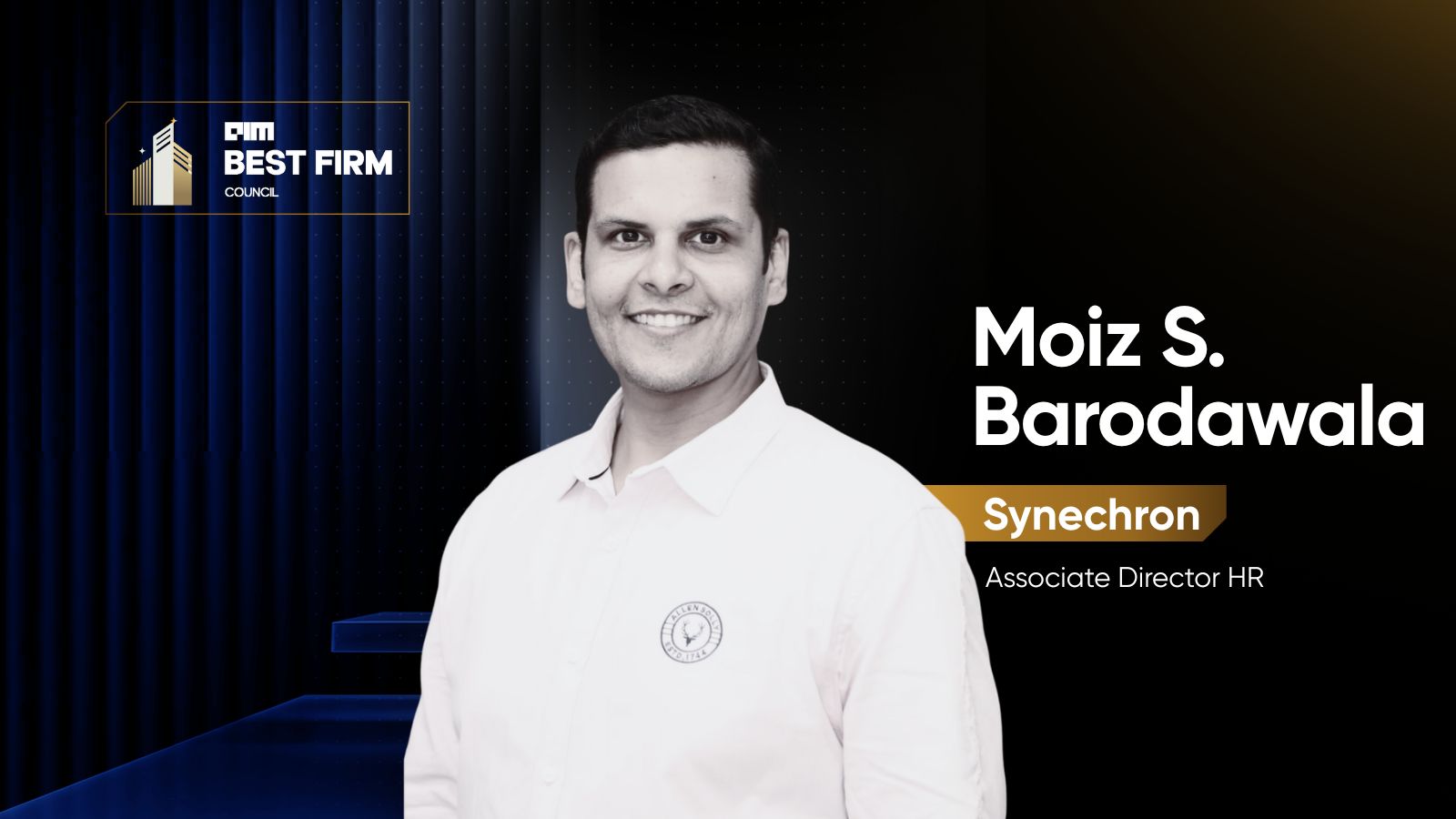
HR Vision Talk: Moiz B on Talent, Speed and Leadership Discipline
HR inside fast-moving tech organisations carries a weight that is not always visible. Businesses expand across geographies, projects become more complex, and expectations rise with each new client or capability. Yet the systems meant to support people through this movement often lag behind. Teams feel the urgency first. Managers absorb it next. HR steps in only when the pace becomes impossible to ignore.
Moiz S. Barodawala manages the realities that come with fast-growing teams and rising delivery expectations. As Associate Director HR, he has spent more than sixteen years moving through talent strategy, digital transformation and people operations in technology organisations. Over the years, one lesson has stayed with him. Talent decisions are not routine tasks. They influence how quickly a company can move.
“Talent is equal to business velocity,” he said. “Once you see how a single hire changes delivery, you understand why HR cannot behave like a support function.”
The view comes from years of watching teams work under pressure. He has seen how the right hire can steady a project at the right moment, how a small delay in staffing can slow an entire delivery cycle and how teams respond when they feel supported rather than stretched.
These experiences have led him toward a practical approach to HR. Keep systems simple, rely on clear information and build leaders who communicate in a way that helps teams stay steady during periods of rapid movement.
Product-Led HR and the Need for Speed
Moiz notes that HR often work inside tech companies, mirrors product development more than traditional operations. Conditions change weekly. Priorities adjust without warning. Waiting for “perfect” processes creates unnecessary drag.
“In fast-moving organisations, perfect systems slow teams down,” he said. “You need mechanisms that improve as you go.”
This mindset has influenced how performance conversations, learning pathways and operational processes are designed. Reducing manual effort, automating routine tasks and giving managers clearer tools have allowed HR teams to shift their attention to decisions that have real organisational impact.
The focus today is practical. Leadership capability must grow across levels, talent must stay prepared for new skill demands, and the systems around employees must remain steady as the organisation expands. These priorities come from a simple understanding that HR cannot afford to trail behind the business. It has to move with it.
Leadership Behaviours That Keep Teams Steady
In Moiz’s view, leadership behaviour becomes the stabilising force when organisations are under pressure. Structures may shift, teams may be reorganised, and new expectations may arrive, but the way leaders communicate and engage must remain steady.
“Teams work faster when they know where they stand,” he said. “Clarity creates stability.”
When teams feel safe to speak early, problems surface before they disrupt delivery. When they do not, issues stay hidden until they become harder to resolve.
Performance and well-being, in his experience, are not opposing priorities. They stabilise each other. Regular check-ins, attention to workload patterns and realistic goal setting create conditions where teams can perform consistently without burning out.
Managers shape the experience. People leave because they stop progressing, not because they dislike their workplace. Mobility, meaningful assignments and supportive leadership have greater staying power than compensation alone.
“People stay where they feel they are progressing,” he said.
This has made manager development a recurring theme in his work. Adaptability, steady communication and willingness to learn have become essential skills in environments where change is constant.
Data, Learning and the Shift in Employee Expectations
The rise of data-driven HR has brought new possibilities, but Moiz treats data with measured discipline. Information is useful only when it leads somewhere.
“If a dashboard does not lead to a decision, it is just a decoration,” he said.
He looks at data to see where challenges may appear. He identifies roles that need attention, skills that need focus, and employees who may need support. The intention is not to build complex visualisations but to create clarity for decision-makers.
Learning follows a similar principle. Technology roles evolve quickly, making long annual cycles ineffective. Employees want ways to grow inside their work, not around it. Practical learning, micro-opportunities and real project exposure help meet that expectation.
The introduction of AI into HR processes has added convenience, but Moiz views its role with caution. Automation can assist with screening, matching and routine tasks, but decisions that affect careers, trust and culture remain firmly with leaders.
“Systems can advise,” he said. “They shouldn’t decide.”
Across the industry, employee expectations have shifted. Professionals want variety, movement and the ability to expand their skills without waiting for annual windows. Organisations that offer these pathways retain people more predictably.
About Mansi Mistri
Mansi is a writer who enjoys breaking down complex topics into simple, readable stories. She is curious about how ideas move through people, platforms, and everyday conversations. You can reach out to her at [email protected].